Storm season can bring more than heavy rain, strong winds, and the occasional power outage. For homeowners, severe weather can also create conditions that affect the air circulating throughout the house. From excess humidity to water intrusion, storms can introduce several indoor air quality concerns that may linger long after the skies clear. When it comes to indoor air quality in Houston, understanding these potential problems can help you keep your home more comfortable and your family breathing easier.
Storms Can Increase Indoor Humidity
Houston already experiences plenty of heat and humidity, and stormy weather can make indoor moisture levels even more challenging to manage. When humidity rises inside your home, your air conditioner has to work harder to keep conditions comfortable. Excess moisture can also create an environment where mold and mildew thrive, particularly in damp areas, around ductwork, or near air conditioning equipment.
If your home feels unusually muggy after a storm, your HVAC system may need some attention. We can help you determine whether your system is controlling indoor humidity properly.
Water Intrusion Can Affect Your Air
Heavy rainfall can sometimes lead to roof leaks, flooding, or water entering through windows, doors, and other vulnerable areas. Even a small amount of moisture can become a concern if it is not addressed quickly.
Wet drywall, carpeting, insulation, and other materials can develop mold growth when they remain damp. Once mold spores become airborne, they can circulate through your home and contribute to unpleasant odors and other indoor air quality concerns.
After a significant storm, take a few minutes to check your home for signs of water intrusion. If you notice damp materials, musty smells, or visible mold, address the moisture source as soon as possible.
Your HVAC System May Be Working Overtime
Storm season often means your air conditioner is running frequently to combat Houston’s heat and humidity. During periods of heavy use, filters can become dirty faster, reducing airflow and allowing more dust and particles to circulate.
A clogged filter can also force your system to work harder, potentially reducing efficiency and increasing wear. Replacing your filter according to the manufacturer’s recommendations is a simple step that can help support cleaner indoor air and proper HVAC performance.
Don’t Forget Your Ductwork
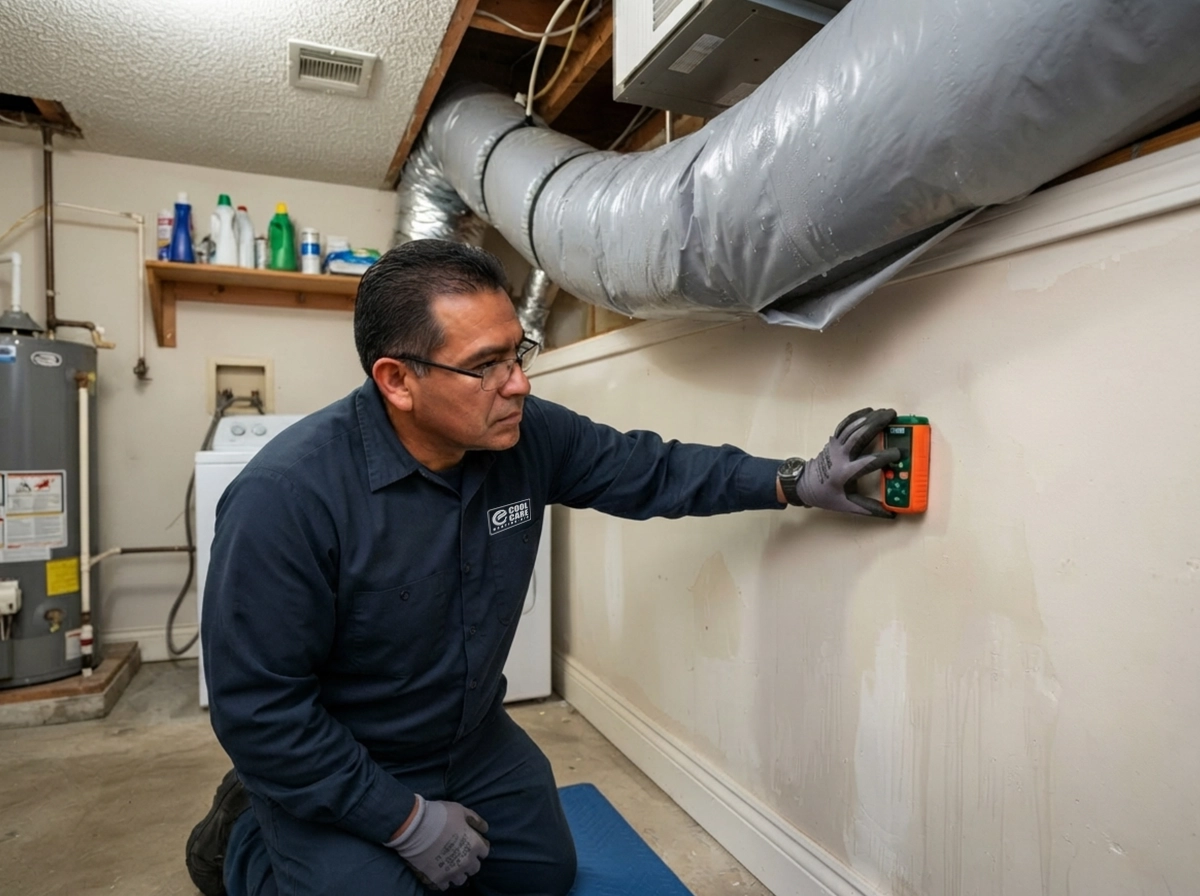
Storm-related moisture can also affect areas around your ductwork, especially if leaks or poor insulation allow condensation to develop. Damaged or contaminated ducts can contribute to dust, odors, and other particles being distributed throughout your home.
If you notice a persistent musty smell when your HVAC system turns on, don’t simply mask the odor with air fresheners. The smell could indicate an underlying moisture or HVAC issue that deserves professional attention.
Breathe Easier After the Storm
You cannot control the weather, but you can take steps to protect the air inside your home. Regular HVAC maintenance, timely filter changes, humidity control, and professional inspections can help keep your indoor environment comfortable during storm season and year-round.
Contact Cool Care Heating and Air Conditioning today to schedule your service and experience The Best Care for Your Air.